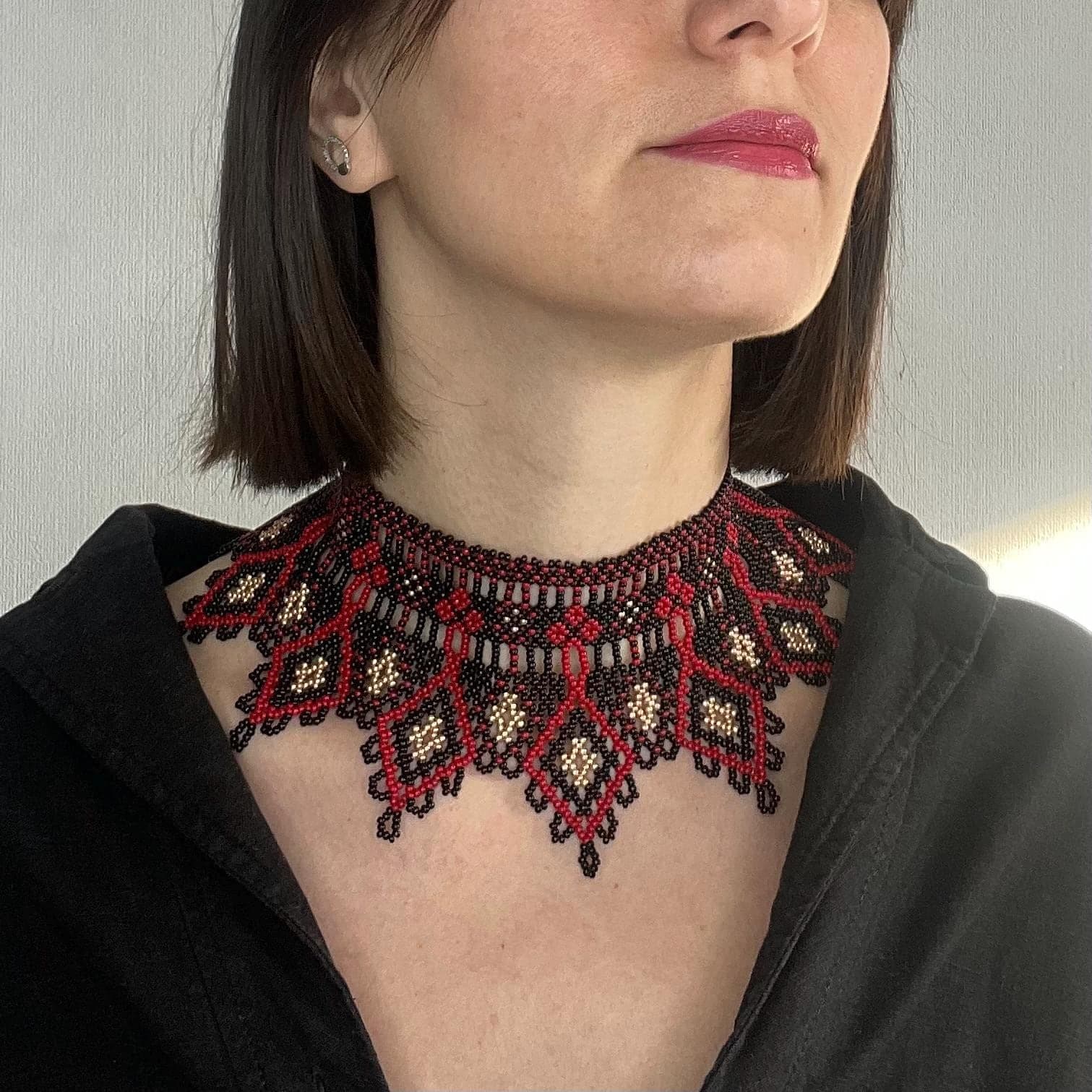
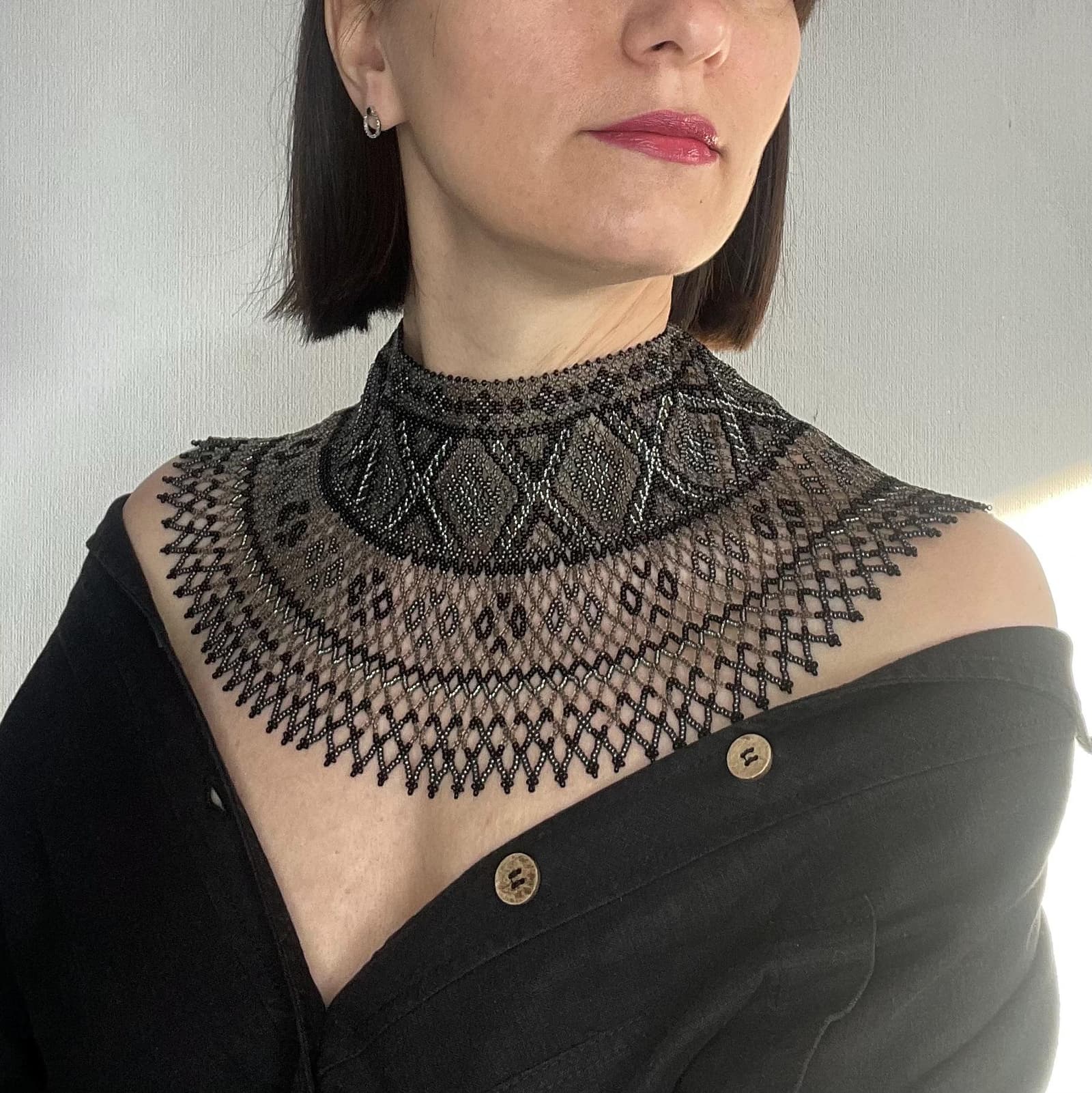
Black lace collar
$131.75was $155
The craft
Netted beadwork is one of those techniques that looks decorative and is actually structural. Here is what is happening.
A sylianka is not embroidery. There is nothing underneath it. Beads are strung in rows and each row is knotted back into the one above, so every bead is held by its neighbours. The finished collar is a self-supporting net — which is why it can be 17 centimetres deep and still lie flat on a shoulder.
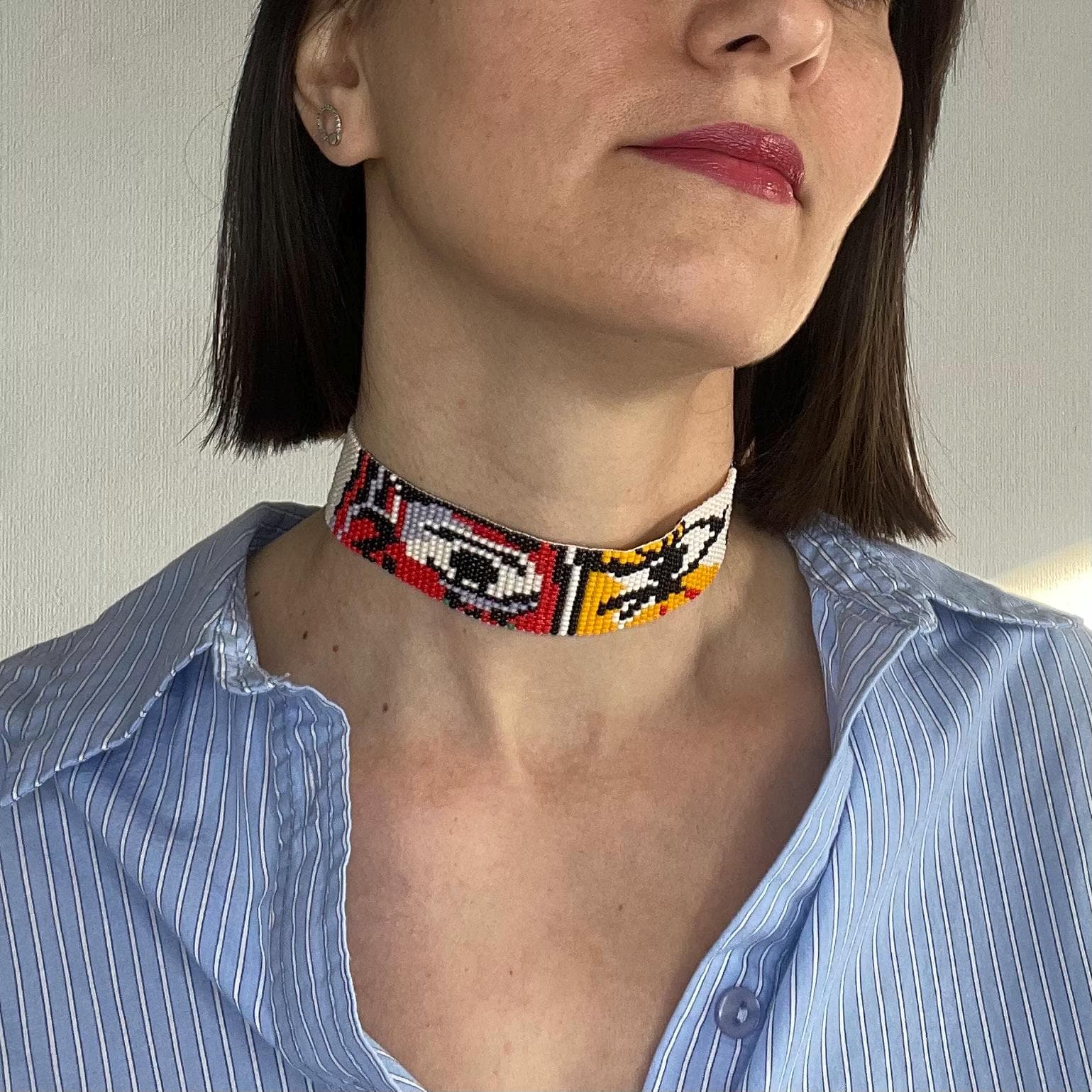
Before anything is strung, the design is drawn on a lattice: each cell is one bead, each row is one pass of the thread. The pattern cannot be improvised halfway through, and a mistake ten rows back is ten rows of unpicking. The upside is that anything that can be drawn on a grid can be woven — which is how the same technique carries a village ornament and a cubist portrait.
Czech Preciosa 10/0, roughly two millimetres across, does nearly all the work in this studio. Holding to a single size is what gives the pieces their even grain, and it sets the resolution: a wide collar is a few thousand beads, and the detail you can reach is a function of how many of them fit across the shape.
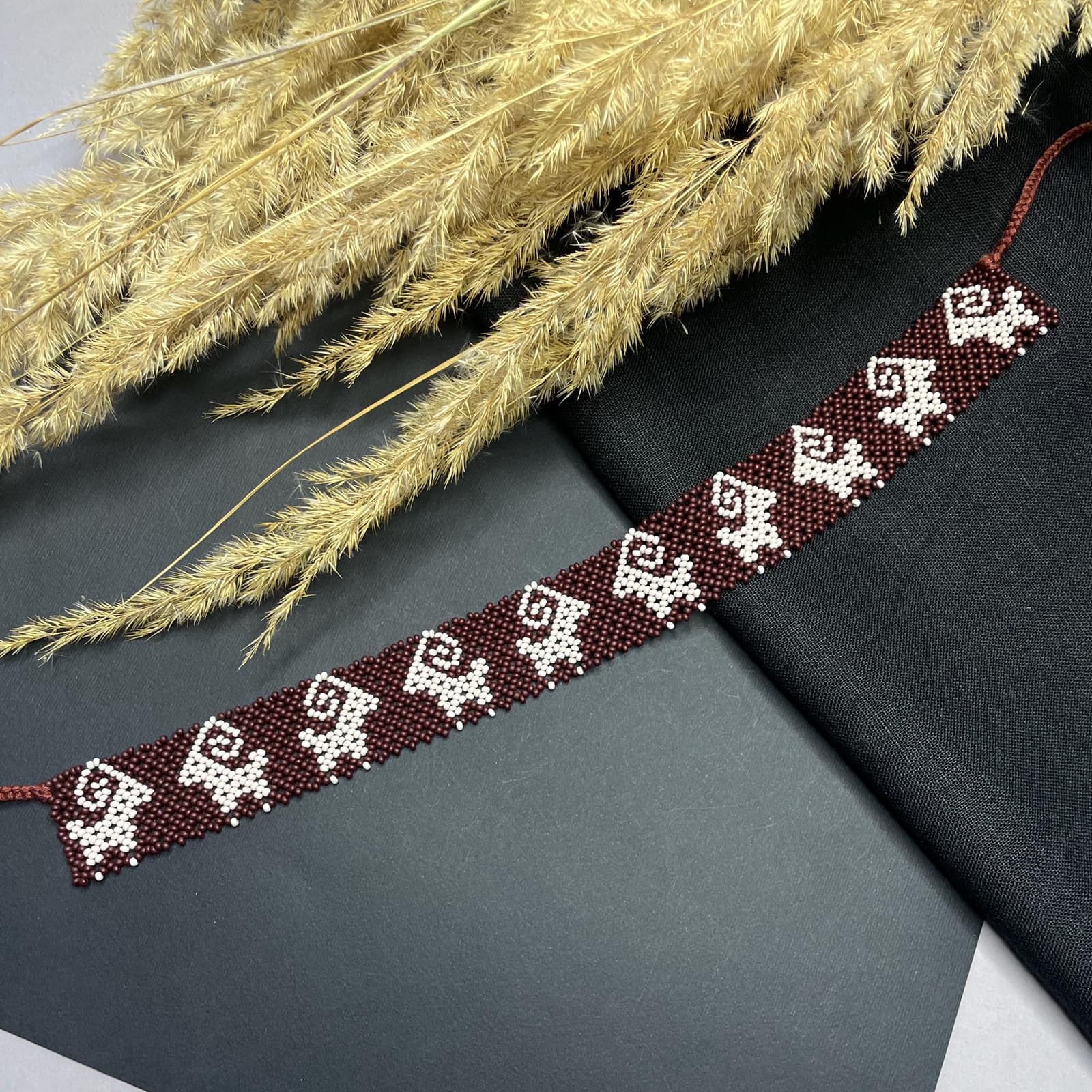
Some pieces stay close to what was recorded — one collar in the shop follows an old Boyko silyanka from the village of Tysiv, Dolynskyi district. Others take the structure and change everything else: a Prymachenko flower, Van Gogh's sky, a row of sheep. Both are the same craft, and the shop makes no hierarchy between them.
Current prices, what is in stock, and shipping worldwide from Chernihiv.
Open the Etsy shop (opens in a new tab)